
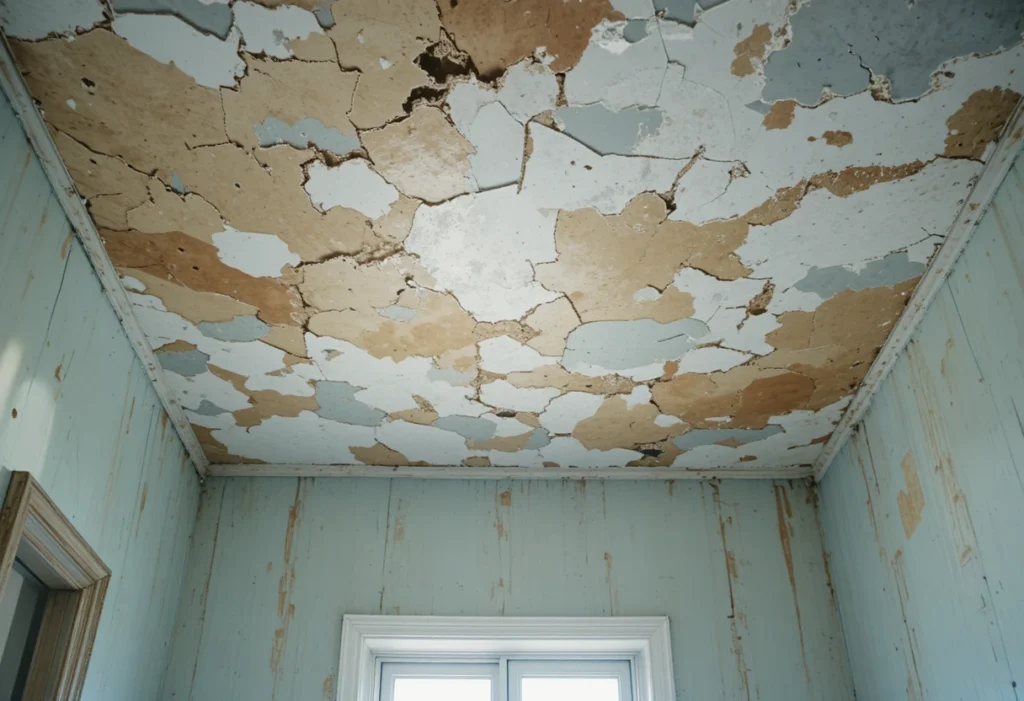
A peeling bathroom ceiling is more than just a cosmetic issue. In many cases, it is a warning sign that excess moisture is affecting your home.
Bathrooms naturally produce a lot of humidity through showers, baths, and hot water usage. When this moisture cannot escape properly, it can damage paint, plaster, and even the structure beneath the surface.
Understanding what causes bathroom ceiling paint to peel is the first step toward fixing the problem permanently.
Why Bathroom Ceilings Peel
Bathroom ceilings are constantly exposed to moisture and temperature changes.
Over time, these conditions can weaken paint and cause it to lose its bond with the surface.
Common causes include:
- Poor ventilation
- High humidity
- Condensation
- Water leaks
- Improper paint application
- Low-quality paint
Identifying the correct cause is essential before making repairs.
Common Signs of Moisture Damage
Peeling paint is often accompanied by other warning signs.
Look for:
- Bubbling paint
- Water stains
- Mould spots
- Damp patches
- Musty smells
- Discoloration on ceilings
These signs usually indicate an ongoing moisture problem.
Poor Ventilation
One of the most common causes of peeling bathroom ceilings is poor ventilation.
When steam from showers cannot escape, moisture remains trapped inside the room.
Over time, condensation forms on the ceiling and gradually damages the paint.
Bathrooms without extractor fans are particularly vulnerable to this issue.
Excess Condensation
Condensation occurs when warm, humid air comes into contact with a cooler surface.
This creates water droplets that repeatedly wet the ceiling.
Repeated exposure to moisture eventually causes paint to crack, bubble, and peel away.
Homes that experience frequent window condensation often face similar moisture-related issues elsewhere.
Hidden Water Leaks
Sometimes peeling paint is caused by a hidden leak rather than humidity.
Possible sources include:
- Roof leaks
- Plumbing leaks
- Damaged pipework
- Leaking fixtures
Water entering from above can saturate the ceiling and cause significant damage.
Incorrect Paint Type
Standard interior paint may not withstand the moisture levels found in bathrooms.
Bathrooms should be painted using products specifically designed for high-humidity environments.
Moisture-resistant paints provide better protection and durability.
How to Fix a Peeling Bathroom Ceiling
Identify the Source of Moisture
Before repainting, determine why the ceiling is peeling.
If the underlying moisture problem is not fixed, the damage will simply return.
Remove Loose Paint
Carefully scrape away any peeling or flaking paint.
Continue until you reach a stable surface.
Clean the Surface
Remove dirt, mould, and loose debris before carrying out repairs.
A clean surface helps primer and paint adhere properly.
Apply a Suitable Primer
Use a stain-blocking or moisture-resistant primer designed for bathrooms.
This creates a strong foundation for the new paint.
Repaint with Bathroom Paint
Choose a high-quality paint designed for humid environments.
Apply two thin coats rather than one thick coat.
How to Prevent Future Problems
You can reduce the risk of peeling paint by:
- Using an extractor fan
- Opening windows after showers
- Controlling humidity levels
- Fixing leaks quickly
- Using moisture-resistant paint
- Regularly checking for mould and damp
Small preventative measures can significantly extend the life of your bathroom ceiling.
When to Call a Professional
Professional help may be necessary if:
- Peeling covers a large area
- Water damage continues to spread
- Mould repeatedly returns
- Structural damage is visible
A professional inspection can identify hidden moisture sources that may not be immediately obvious.
Final Thoughts
A peeling bathroom ceiling is usually a sign that moisture is affecting your home.
By identifying the cause, improving ventilation, and using the correct repair methods, you can restore the ceiling and prevent future damage.
Addressing the issue early can save both time and money while helping maintain a healthier home environment.